HOW TO LEARN HYDROFOIL SURFING
So you want to learn to hydrofoil surf? Congratulations! We also have actually caught the foil pest for all of our board sporting activities. Surf hindering is genuinely an one of a kind experience that makes the most limited days into wonderful sessions. Aside from the silent, smooth, as well as easy slide, surf hydrofoils take advantage of the most powerful part of the wave simply underneath the surface area. This allows you to keep momentum as well as connect areas on the tiniest wave.

STEP 1-- FIND OUT TO BROWSE
The primary step is learning to hydrofoil surf is finding out just how to browse [on] a regular surfboard. This might seem like sound judgment however most surfers can inform you that discovering to surf is a procedure. Including a hydrofoil to that mix is a recipe for a steep discovering contour. If you do not yet consider yourself a confident web surfer, get hold of a board as well as go out there for some practice. Similar to many points, utilizing an institution or instructor will substantially enhance your progression. Along with being a positive internet user, you must understand just how to ride a smaller sized board like a shortboard or fish design. These boards are most similar fit and use to surf foil boards on the market today as well as flight differently than longboards. Most especially, they need a steeper wave face and fast turn up because of their smaller size.
STEP 2-- EXERCISING BEHIND A BOAT
If you do know exactly how to browse a smaller board after that you await the second action of finding out foil boarding. This second action is discovering to ride a hydrofoil board behind a boat. Riding a foil behind a watercraft enables you to concentrate on exactly how the hydrofoil works as well as training your body to react accordingly without the added variables that waves introduce. Order a boat, Jet Ski, sailboat ... whatever and also a pair like-minded friends for some practice. Longer tow lines allow you to avoid the watercraft's cavitation (oxygenated water) for the best flight. Reducing outside the wake will likewise aid. Below is a checklist of advised boat rates for the most convenient knowing. The appropriate rate offers stability as well as sufficient lift to the foil.
8-12 mph -Low aspect/ high volume wings (Slingshot H2 & H4, Naish Thrust L surf & WS, Lift 170, Gofoil Iwa, Gofoil Maliko, Cloud 9 P27, Delta Browse, Delta Huge browse).
10-14 mph Low element/ Tool volume wings (Slingshot H1, Naish Drive M, Fluid Pressure Impulse, Raise 150, Gofoil Kai, Cloud 9 S24).
After board starting behind the watercraft, the very first point you wish to do is discover exactly how to ride with the board on the water. This will certainly need a fair amount of front foot pressure to maintain the board from turning up on foil. If you discover that you are placing more than 70-percent of your body weight on the front foot, change your foot position additionally forward on the board. For most foils, the ideal back foot position is straight over the front pole edge with your front foot shoulder width apart. https://www.cloud9surffoils.com.au/ When you have grasped keeping the board on the water it is time for regulated take offs.
ACTION 3-- MANAGED REMOVE.
Regulated remove are needed for effective hydrofoiling in any type of self-control. Removing deliberately enables you to keep your momentum and also start from a secure system. The trick to this is moving your weight slowly as well as efficiently without upper body movement. Do not assume of your hydrofoil like a skateboard or a typical surfboard that needs drastic leg movement and overstated body movements. If you can discover to keep your body quiet and also gradually change weight from one foot to the other, your understanding curve will speed up in a much more risk-free method without developing bad habits. To practice this, flex your knees and also change weight from one foot to the other while keeping your top body in the exact same setting. When you are controlled and would like to lift off, shift your weight slowly to your back foot till the foil begins to climb. When you are just a couple of inches off the water begin to change your weight onward until the board quits increasing. If you can hold that position steady after that you will certainly get some long trips on foil. When you have this mastered, the following action is to exercise pumping up and down along with reversing and forth. This will certainly take some practice and great deals of is up to get right but when you do you will certainly prepare to strike the waves.
STEP 4-- YOUR FIRST SESSION.
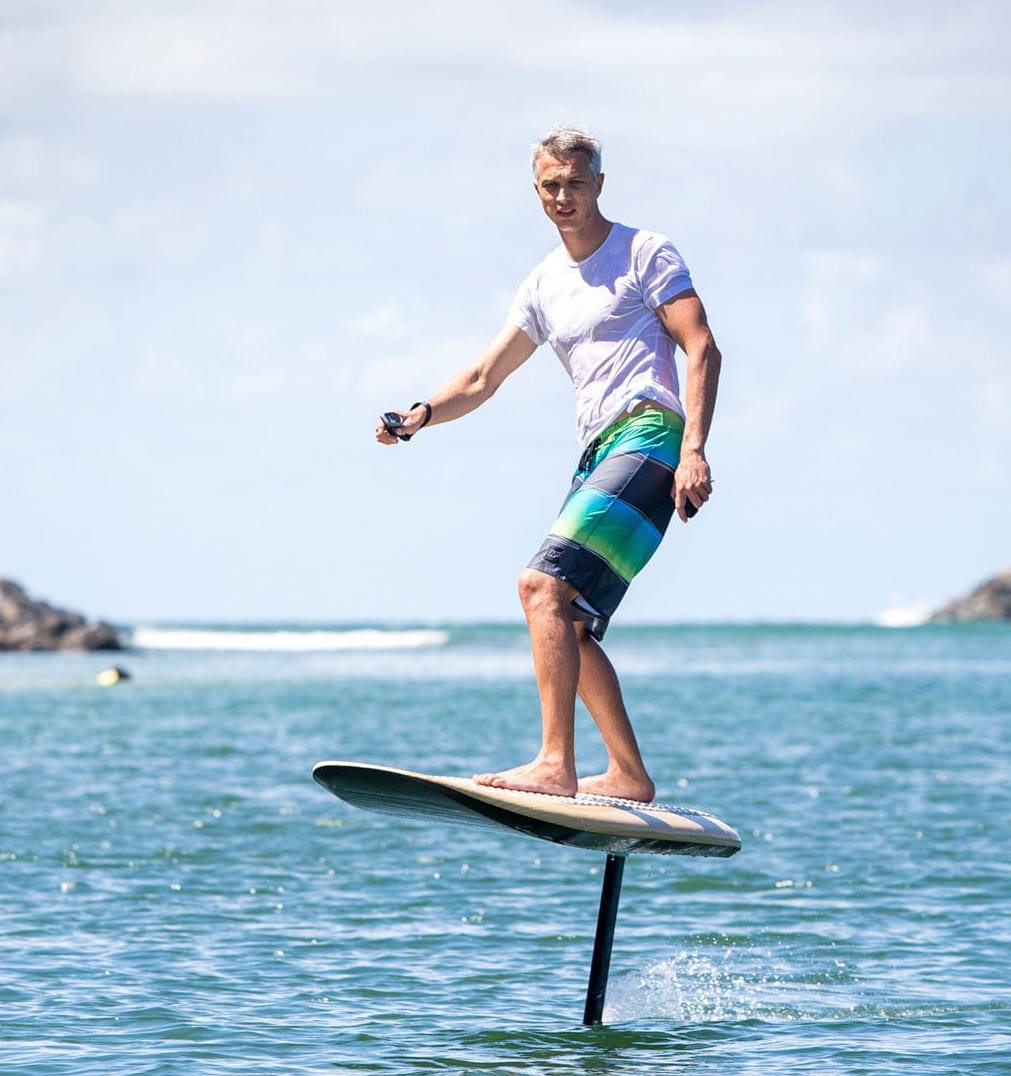
The first time you paddle out make certain to do 2 points to prepare. First, attach a browse leash of appropriate dimension. Hindering with a chain not only secures other people in the lineup but also aids in visibility if a crash ought to take place. If your leash is affixed your board will certainly "gravestone" and also indicate to other waterman or lifeguards that you are in problem as well as mark the spot for your rescue. Without a leash, your board will merely wash in without any sign that you are in problem. While we are on the topic of safety and security, we always advise making use of a helmet and also impact vest when hindering in any sporting activity to safeguard yourself.
The second thing to do in the past striking the water is to relocate your foil closer to the tail of your board. This will certainly help in keeping your board on the water when capturing the wave. The last thing you want when you are paddling in is to lift off on foil.
When paddling out for your initial session, find an area without barriers: web surfers, swimmers, piers, reefs etc. These just make complex as well as make your first attempts more difficult and also harmful. When you locate your place, paddle out equally as you would with your normal board.
Catching your first wave will certainly go similar to a typical browse session. Locate a wave, paddle with it, and reach your feet. When you get this far, change gears to your boat training and slowly move your weight backwards, hop on foil, and also level it off. When you do this you will speed up down the line and also most likely elude the wave, so prepare yourself for a cutback to bring yourself back to the wave or discover another bump to lug you along. If you have prepared effectively, this with come naturally as well as without trouble. Paddle back out with your substantial frothing smile and do it again! If you are still a little bit shaky or discover some tough waves just keep in mind to commit to your drops. If you begin to fall, do NOT attempt to save it and over appropriate, this is where most people take tough drops. If you can see the fall and simply devote to it, you will likely topple beautifully rather than drawing on your board.

HELPFUL SURF FOILING TIPS & TRICKS.
Grasping the art of foil searching will certainly take a while as well as no one can tell where this brand-new kind of wave riding will lead or how the modern technology will evolve. Currently, the fad is lengthy flights on tiny waves that would generally leave you on the coastline. If you locate yourself riding in little waves, refining the hop/glide as well as cut down are key to long flights. The hop and slide enables you to bring your wings more than ride the momentum down and also proceed your trip even without a wave existing. The trick here is to draw your knees up high after that glide for a brief duration. If you can do this a pair times in succession you can begin your momentum after that glide for a longer period. Do not get on the board yet rather suck your knees up then ride it bent on maintain maximum energy without interruption. Cutbacks are another excellent method to remain on foil without a powerful wave. By cutting back and forth across the extra powerful component of the wave you can maintain your momentum without eluding the wave. By using these strategies and also having an eager eye to find the next tiny bump you will certainly locate yourself riding till your legs offer.